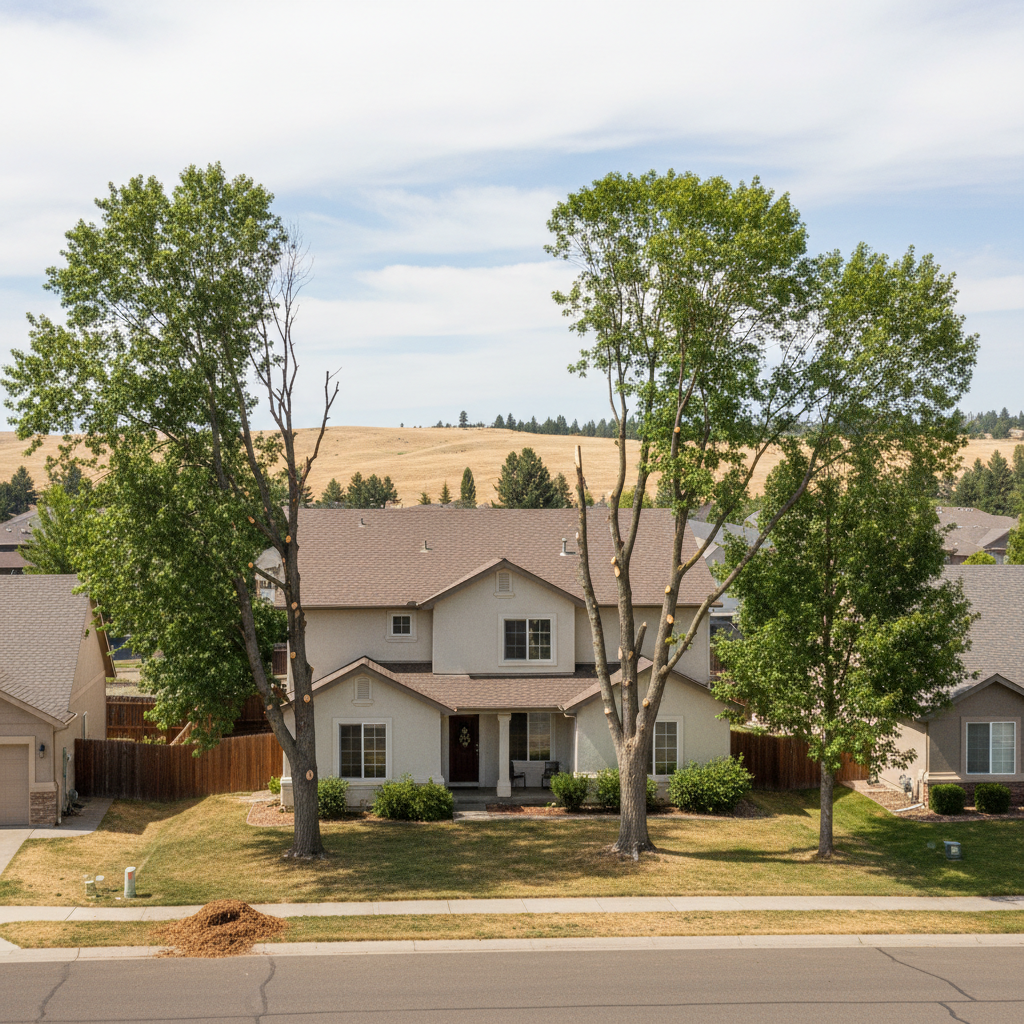
You've got trees, right? And at some point, they're gonna need a trim. Seems simple enough, but here in Pasco, it's not always as straightforward as just grabbing a saw. There's a lot more to it than folks realize, and if you don't do it right, you can really mess up your trees and even create hazards.
It's Not Just About Looks
A lot of people think tree trimming is just for aesthetics – making the tree look neat and tidy. And sure, that's part of it. But the real reasons we trim trees are about health, safety, and promoting strong growth. You're not just hacking away; you're shaping, strengthening, and protecting your investment, after all.
- Health: We take out dead, diseased, or insect-infested branches. This stops problems from spreading to the rest of the tree. Think of it like getting a cut cleaned up before it gets infected.
- Safety: Branches hanging over your house, power lines, or walkways are a big no-no. Especially with our strong Pasco winds that kick up, a weak branch can become a real danger. We've seen plenty of branches come down on roofs or fences during a good gust.
- Structure: Good trimming helps a tree develop a strong structure. We can guide its growth, remove crossing branches that rub and create wounds, and make sure it's balanced. This is super important for younger trees, setting them up for a long, healthy life.
- Sunlight and Airflow: Thinning out a dense canopy lets more sunlight reach your lawn or garden below, and it also improves air circulation within the tree itself. Better airflow means less chance of fungal diseases taking hold, which can be a problem in our humid spring months.
Pasco's Unique Challenges (and Opportunities)
What works for a tree in, say, Seattle, isn't always the best approach here in Pasco. Our climate is different, our soil's different, and even the types of trees people plant are often different.
We get those hot, dry summers that can stress trees, followed by cold winters. This means certain times of year are better for trimming than others. Trim a tree at the wrong time, and you can leave it vulnerable to sun scald or disease. For example, if you prune a shade tree too heavily right before July hits, you're exposing bark that isn't used to that intense sun. That's a recipe for trouble.
And let's talk about our soil. We've got a lot of sandy, volcanic soil around here, especially in newer developments like those out by Road 68. This soil drains fast and can be nutrient-poor if not amended. Trees growing in these conditions might need a different approach to trimming than those in richer, loamy soil. They might be more susceptible to stress if pruned too aggressively.
We also see a lot of specific tree types around here – maples, oaks, fruit trees, and plenty of evergreens like pines and junipers. Each of these has its own best practices for trimming. You wouldn't trim a fruit tree the same way you'd trim a shade tree, right? For fruit trees, it's all about maximizing fruit production and maintaining an open structure. For a big shade tree, it's more about structural integrity and safety.
Why Local Expertise Matters
This is where local knowledge comes in. Someone who's been working with trees in Pasco for years, like us at Pasco Tree Service, understands these nuances. We know:
- When the best time is to prune specific species in our climate.
- What diseases or pests are common in the Tri-Cities area and how trimming can help prevent or manage them.
- How our strong winds affect tree stability and what kind of structural pruning is needed to mitigate risks.
- The common issues homeowners face, whether it's branches growing into power lines in older neighborhoods like Riverview, or shaping young trees in new builds.
We're not just trimming branches; we're making informed decisions based on years of experience right here in your backyard. We've seen what works and what doesn't work for trees in Pasco.
So, when you're thinking about getting your trees trimmed, don't just call anyone. Call someone who knows Pasco, knows its trees, and knows how to keep them healthy and safe for years to come. It's an investment in your property, and you want to make sure it's done right.